
How Bin Stores Get Their Inventory (Returns, Pallets & Truckloads)
The supply chain in one paragraph
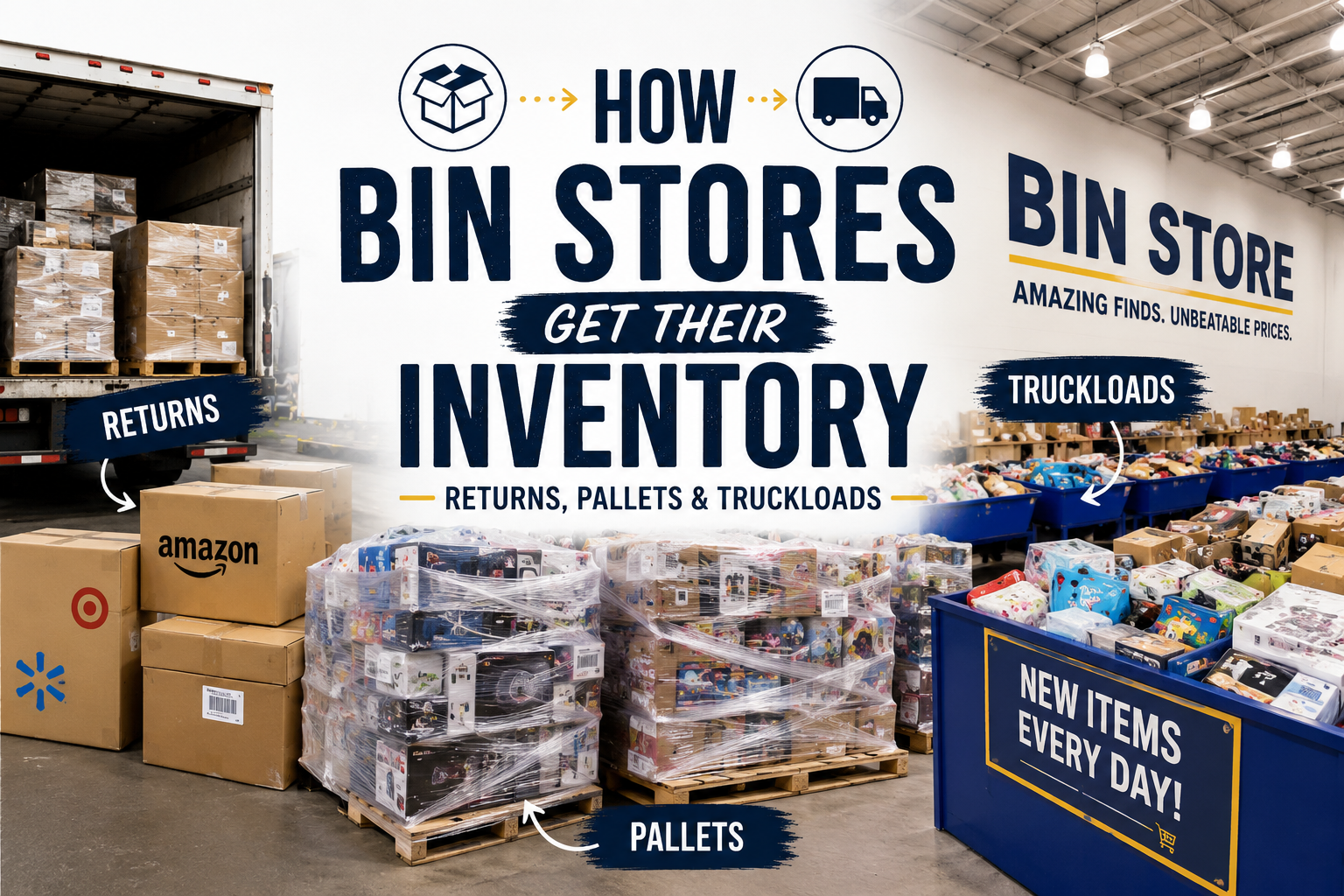
When you return something to Amazon or a big-box store, it rarely goes back on the shelf. Retailers batch returns, overstock, and shelf-pulls into pallets, then sell them in bulk through liquidation channels — direct programs, auction marketplaces, and specialist wholesalers. Bin stores buy those pallets — usually 24-26 pallets at a time as a full truckload — sort them into bins, and sell to the public.
The main sourcing channels
- Retailer liquidation programs. Amazon, Walmart, Target and others sell returns in bulk, often through contracted platforms. Consistent volume, less control over contents.
- Liquidation auction marketplaces. Sites where pallets and truckloads are auctioned by condition and category. Prices float with demand.
- Liquidation wholesalers and truckload suppliers. Companies that buy directly from retailers in volume, break loads down (or don't), and sell truckloads with a manifest or a category promise. This is how most established bin stores buy, because a reliable supplier relationship beats auction roulette: you know roughly what your cost per item is, what categories you're getting, and that the load wasn't cherry-picked.
What separates good inventory from bad
Three questions every store owner learns to ask: Is the load manifested or unmanifested? What's the return reason mix (buyer remorse is gold; defective is not)? And has anyone opened the boxes before you? Untouched loads straight from the retailer command a premium because cherry-picked loads — where someone already pulled the valuable items — are how new store owners get burned.
Why supplier choice makes or breaks a bin store
A bin store's economics live and die on cost per item versus average sale price across the pricing cycle. A trustworthy truckload supplier who delivers consistent, untouched loads week after week is the single most important business relationship a bin store has. Most successful stores buy from the same one or two suppliers for years.