
How to Open a Bin Store in 2026: Costs, Inventory & First 90 Days
Why bin stores are booming
Bin stores combine low startup costs, cash-based daily revenue, and inventory that costs pennies on the retail dollar. Shoppers love the treasure hunt; owners love that a single truckload of returns — bought right — can stock a store for a week and sell out by Saturday.
Startup costs, realistically
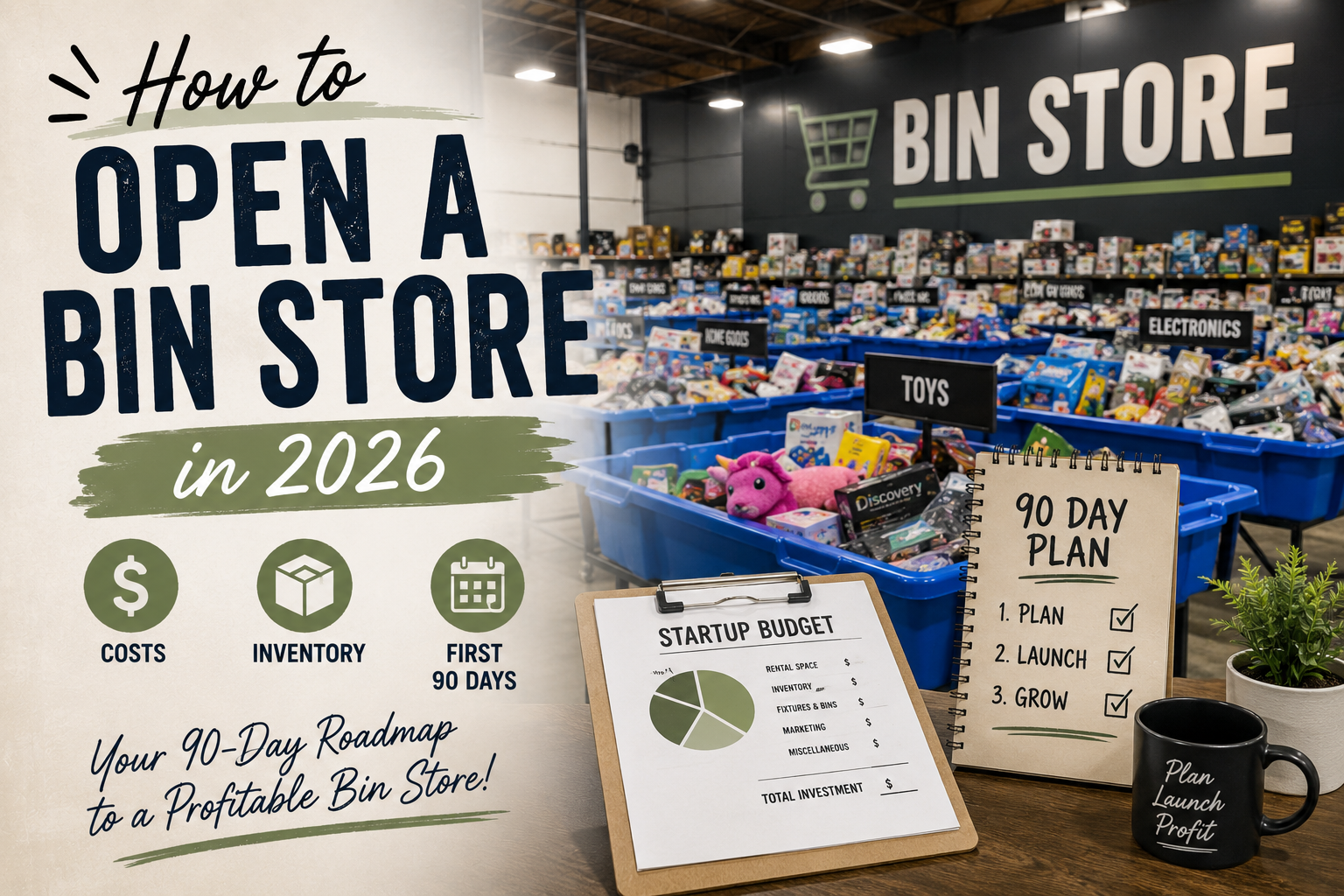
Most independent bin stores open for $20,000-$50,000 all-in: first/last month on a 2,000-4,000 sq ft retail space, basic buildout (bins are literally the fixtures — many owners build their own), signage, a point-of-sale system, insurance, an LLC, and — the big one — your first two or three truckloads of inventory. Location matters less than for typical retail: bin store customers drive to deals, so cheaper strip-mall or warehouse-district space works.
Inventory is the whole business
Your product is whatever's on the truck, so your supplier IS your store. What to look for in a truckload supplier: untouched (non-cherry-picked) loads direct from major retailers, consistent weekly availability so your restock day never slips, honest category mixes, freight handled or clearly priced, and a real warehouse you can call. Expect to pay a few thousand dollars per truckload of general merchandise returns; a good load yields thousands of sellable items — cost per item well under a dollar. GRP Truckloads, which runs this directory, supplies bin stores nationwide with untouched Amazon and big-box return loads — get a load list if you're sourcing.
The pricing cycle that prints repeat customers
Pick a restock day (Friday and Saturday are king). Price day one at $10-$15 flat, then step down daily to $1 by cycle's end. Announce restocks on Facebook and TikTok — bin store content performs absurdly well locally, and your restock-day line is your best ad.
Your first 90 days
Weeks 1-4: secure space, LLC, insurance, build bins, line up your supplier and first two loads. Weeks 5-8: soft-open with one load, learn your sell-through, film everything for social. Weeks 9-12: lock your restock rhythm, add a second weekly load if sell-through supports it, and start a simple loyalty mechanic (early-entry passes for restock day are pure margin). The stores that fail almost always fail on inventory quality or restock consistency — solve the supplier question first and the rest is retail basics.