
Buying Liquidation Pallets: A Beginner's Guide
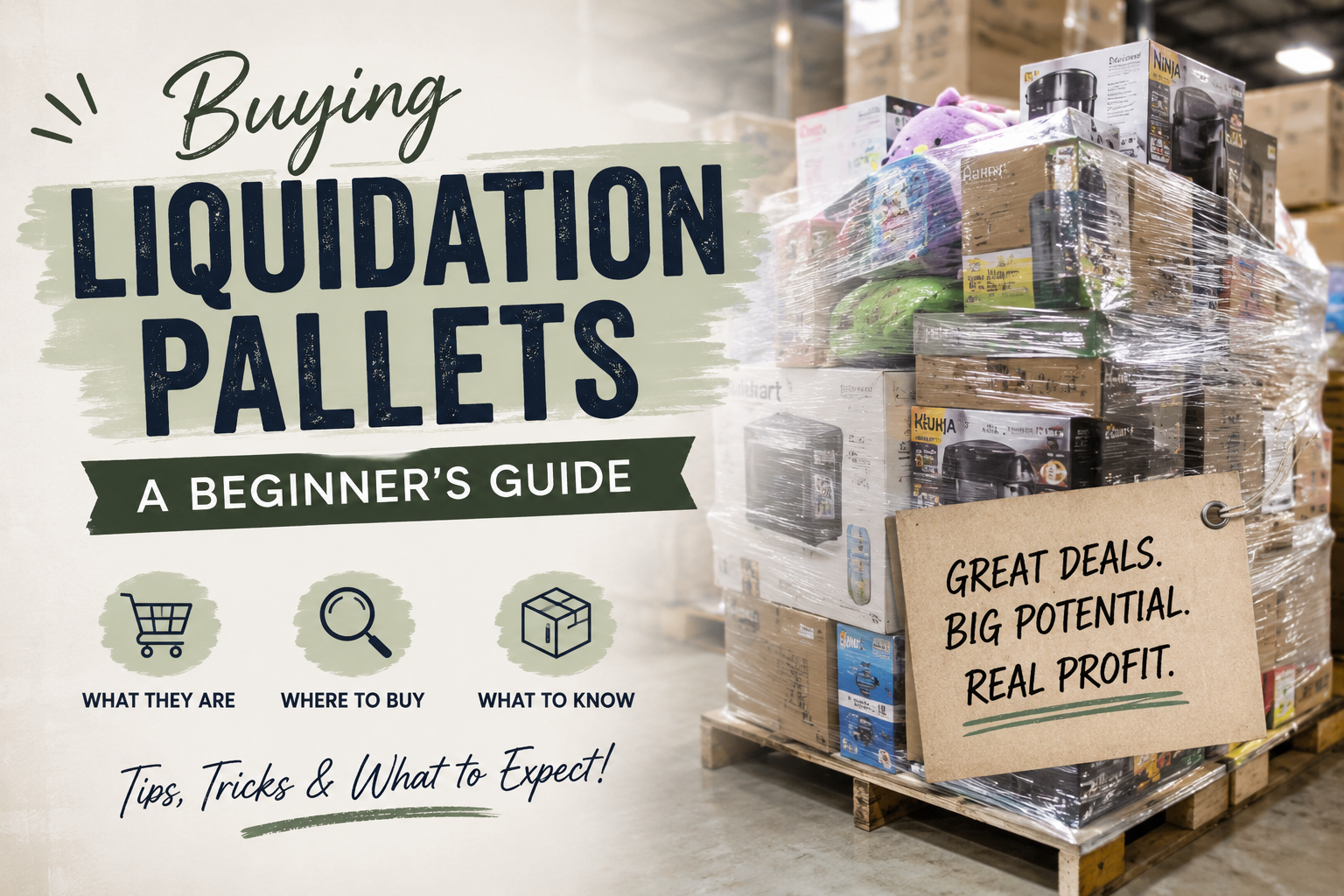
Start with the vocabulary
- Manifest: an itemized list of the load's contents with retail values. Manifested loads cost more; you know what you're buying.
- Unmanifested: mystery loads, cheaper, higher variance.
- Shelf-pulls: items that never sold — new condition, no customer handling.
- Customer returns: the biggest category. Mostly fine, some damaged, sold as-is.
- Salvage: known-damaged goods for parts or repair. Cheapest, hardest to profit from.
The only formula that matters
Cost per item = (pallet price + freight) ÷ item count. Compare that to what you can realistically sell items for — not retail price, your actual channel price (bin store, flea market, eBay, Facebook Marketplace). Beginners overestimate sale prices and forget freight. Freight can be a third of the total cost on a single pallet, which is why per-item costs drop dramatically when you graduate to truckloads.
Red flags when buying
- Prices that seem too good — usually cherry-picked loads or outright scams (pay by wire, no address, stock photos).
- Sellers who won't say where the load originated or show it on a pallet.
- "Guaranteed profit" claims. Nobody guarantees liquidation outcomes.
- No physical warehouse you could visit. Reputable suppliers have docks, not just Instagram accounts.
A sane progression for beginners
Buy one or two pallets locally first (search the directory for wholesalers near you) so you learn sorting, condition rates, and your real sell-through before money gets serious. Track everything. When your numbers work at pallet scale and you're selling consistently, step up to truckloads — per-item cost typically falls by half or more, which is where bin stores and serious resellers make their margin.