
What Is a Bin Store? How Bin Stores Work
The short version
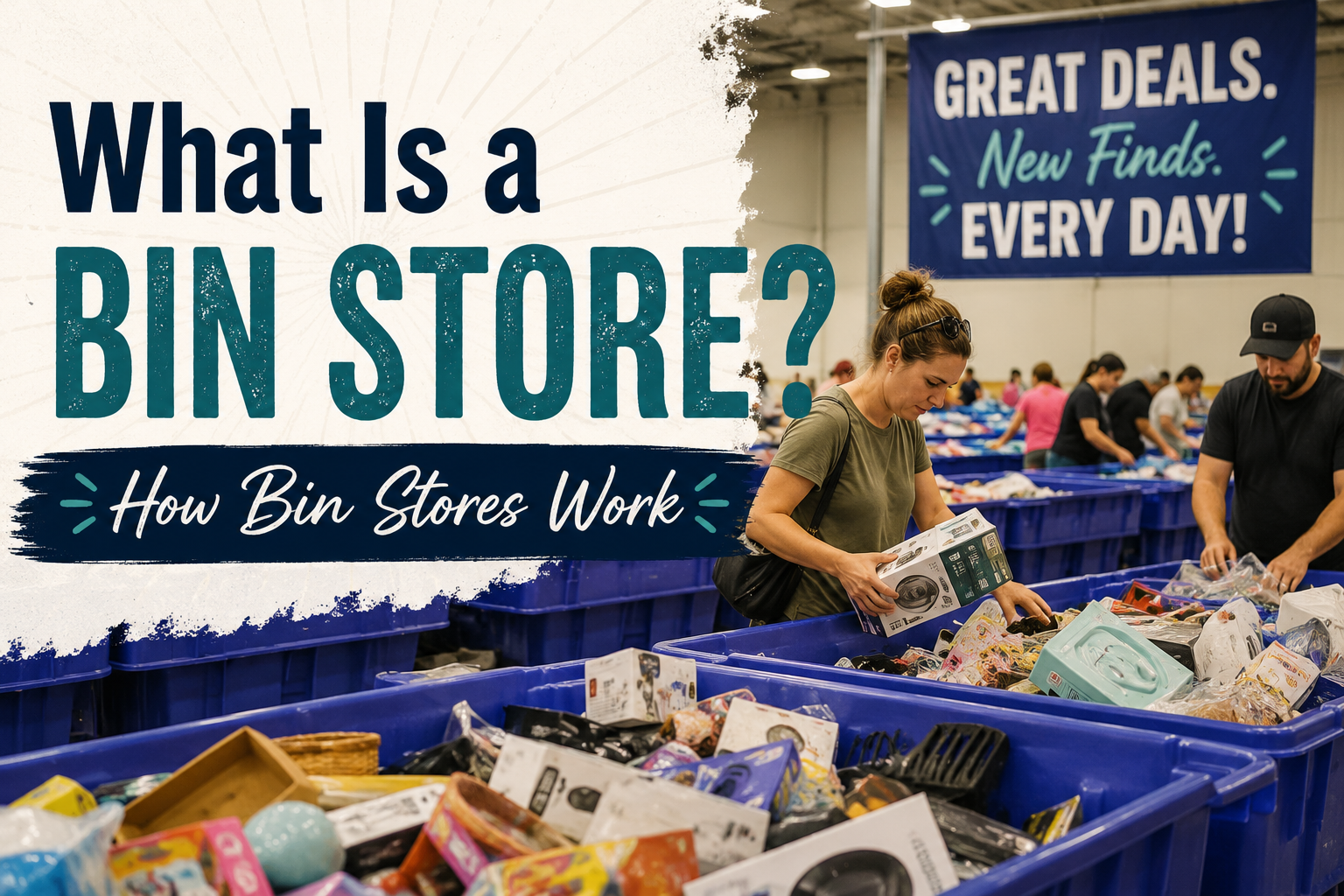
A bin store is a discount retailer that buys truckloads of customer returns and overstock — mostly from Amazon, Walmart, and Target — and sells the items out of large sorting bins at flat, falling prices. Restock day might be $12 per item; each day after, the price drops ($10, $8, $6...) until everything left is a dollar or two, then the bins are refilled and the cycle restarts.
Why the prices work like that
The store buys merchandise by the pallet or truckload, paying a small fraction of retail value — often 10 to 20 cents on the dollar. They don't know exactly what's in every box, and neither do you: that's the treasure hunt. Early in the cycle you pay more but get first pick (electronics, name brands, high-value items go fast). Late in the cycle, prices are lowest but the good finds are mostly gone. Every shopper picks their own trade-off, which is why the model keeps people coming back weekly.
What you'll actually find
Typical bins hold Amazon customer returns and shelf-pulls: phone accessories, kitchen gadgets, tools, toys, clothing, home goods, and the occasional high-ticket surprise. Most items are new or like-new — returns happen because someone ordered the wrong size or changed their mind, not because the product is broken. That said, bin stores sell as-is, so test what you can and factor a few duds into your math.
Bin store etiquette (yes, it exists)
Get there early on restock day if you're serious — regulars line up before opening. Don't hoard carts of unpaid items while you decide. Most stores don't allow returns, and many are cash-friendly small businesses. Bring patience: digging is the sport.
Bin stores vs. liquidation stores vs. outlets
A traditional liquidation store prices items individually and keeps them on shelves. An outlet sells a brand's own overstock. A bin store is the fastest-moving, cheapest, least-predictable of the three — and for resellers and bargain hunters, often the most profitable place to dig.